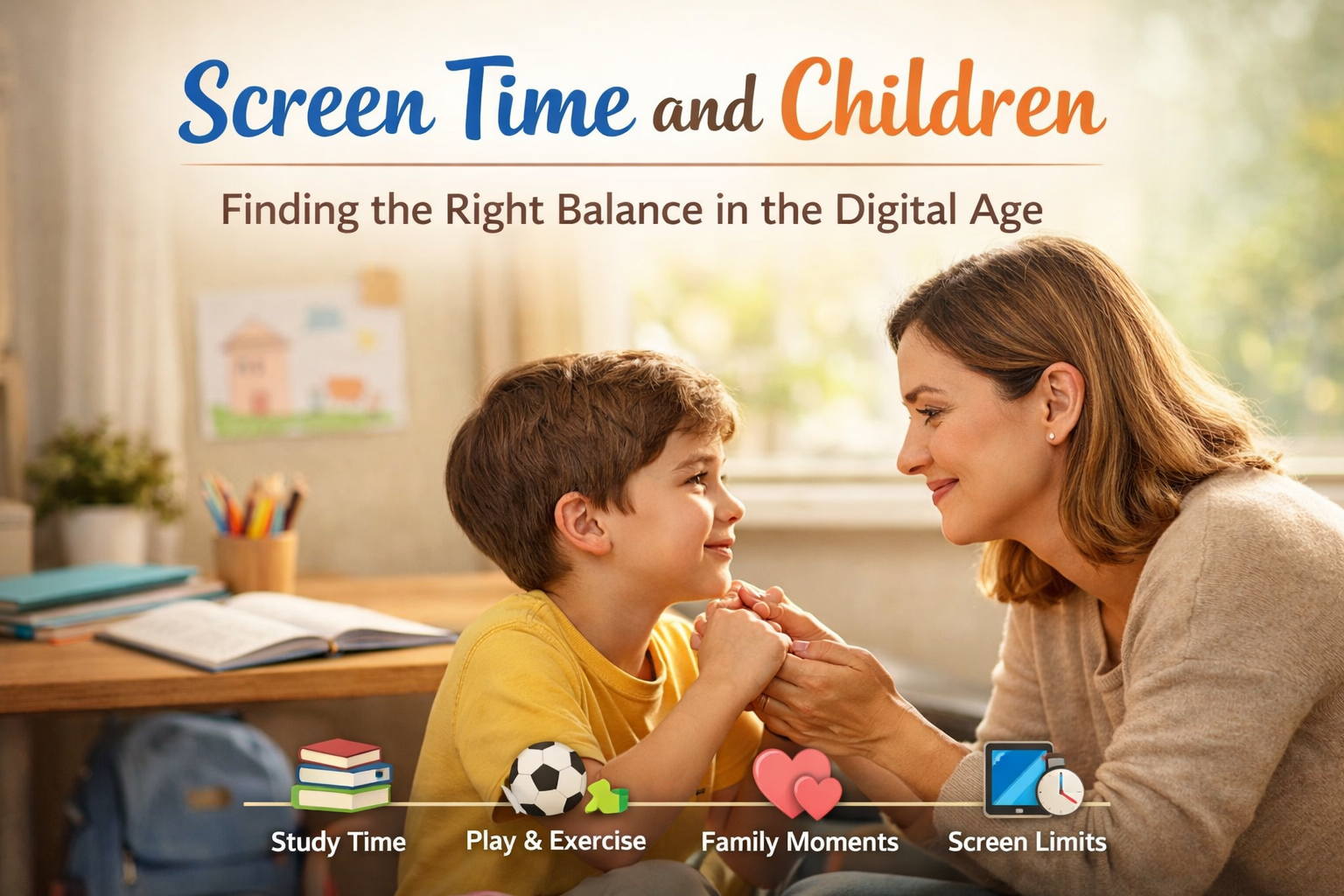
Screen Time and Children: Finding the Right Balance in the Digital Age
We are living in a digital world. Smartphones, tablets, television, online classes, games, and social media have become a natural part of daily life — not only for adults but also for children.
Many parents today feel confused and worried about screen time. On one hand, screens help children learn new things, stay entertained, and even connect with friends. On the other hand, too much screen exposure can affect their health, behavior, studies, and emotional well-being.
So the real question is not “Should children use screens or not?”
The real question is “How can parents create a healthy balance?”
Let us understand the impact of screen time and discover practical ways to manage it peacefully.
Understanding Why Screens Attract Children So Much
Screens are designed to be engaging. Bright colors, fast movement, sounds, rewards in games, and endless videos keep children interested for long periods.
For children, screens provide:
- Instant entertainment
- Quick rewards and excitement
- Escape from boredom
- Easy access to cartoons and games
- A feeling of independence
In busy households, screens also become a convenient way for parents to keep children occupied. Slowly, this convenience can turn into a daily habit — sometimes even a dependency.
When Screen Time Becomes Too Much
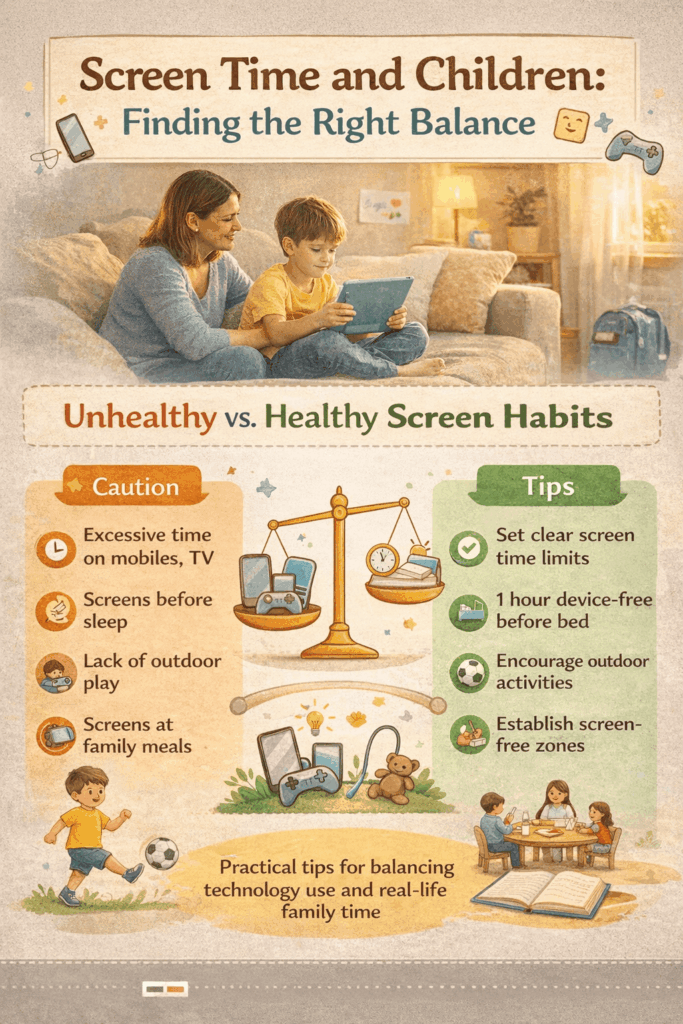
Moderate screen use is not harmful. But excessive screen time can create several challenges.
1. Reduced Attention Span
Fast-paced content can make it difficult for children to focus on slower activities like reading, homework, or creative play.
2. Sleep Problems
Using screens before bedtime affects natural sleep cycles. Blue light from devices can reduce sleep quality and make children feel tired during the day.
3. Physical Health Issues
Too much sitting leads to reduced physical activity. This may increase risks of obesity, poor posture, and eye strain.
4. Emotional and Behavioral Changes
Children who spend long hours on screens may become more irritable, impatient, or socially withdrawn. They may also struggle to manage frustration when devices are taken away.
5. Impact on Studies
Excessive gaming or video watching can reduce interest in academics and structured learning.
But Screens Also Have Benefits
It is important to understand that screens are not enemies. When used wisely, they can support development.
- Educational videos improve understanding
- Creative apps build skills
- Online classes provide learning opportunities
- Video calls help maintain social connections
- Informational content increases awareness
The goal is not to eliminate screens, but to guide children toward healthy usage.
How Much Screen Time is Healthy?
Experts often suggest general guidelines:
- Preschool children: Very limited and supervised screen time
- School-going children: About 1–2 hours of quality screen time daily
- Teenagers: Balanced use with clear routines
However, every child and family situation is different. The focus should be on quality, timing, and balance rather than strict numbers alone.
Practical Ways to Create Screen Time Balance
Creating healthy screen habits does not require daily fights. Small consistent steps can bring big change.
1. Set Clear and Calm Rules
Children feel secure when routines are predictable. Decide screen time duration and communicate it lovingly.
For example:
“You can watch cartoons for 30 minutes after homework.”
Consistency is more important than strictness.
2. Avoid Screens Before Sleep
Try to stop screen use at least one hour before bedtime. Instead, introduce calming activities like storytelling, reading, or soft music.
This improves sleep quality and emotional relaxation.
3. Create Screen-Free Zones
Dining table, bedroom, and family conversation time can be declared screen-free. This encourages bonding and mindful living.
4. Offer Interesting Alternatives
Children naturally move toward screens when they feel bored. Parents can provide:
- Outdoor play
- Drawing and crafts
- Puzzle games
- Reading storybooks
- Helping in simple household tasks
When life becomes engaging, screen dependency reduces automatically.
5. Watch Together Sometimes
Co-viewing helps parents understand what children are watching. It also creates opportunities to discuss values, learning, and real-life connections.
6. Be a Role Model
Children observe more than they listen. If parents are constantly on phones, children will follow the same behavior.
Keeping personal screen use balanced sends a powerful silent message.
7. Use Technology Wisely
Parental controls, educational content selection, and time-limit settings can help manage usage without daily arguments.
Handling Screen Time Tantrums Calmly
It is normal for children to resist when screen time is reduced. Instead of reacting with anger, parents can:
- Give advance reminders (“10 minutes left”)
- Offer transition activities (“Let’s go for a walk now”)
- Stay calm and firm
- Appreciate cooperation
Over time, children learn to accept limits.
Building Emotional Connection Beyond Screens
Sometimes excessive screen use is a sign of emotional needs — loneliness, lack of attention, or stress. Spending meaningful time with children reduces this need.
Simple habits like talking about their day, playing together, or sharing meals can strengthen bonding.
When children feel connected, screens lose their emotional importance.
Preparing Children for a Digital Future
Technology is part of modern life. Instead of fear, children need guidance. Teaching digital responsibility is as important as teaching academic skills.
Parents can discuss:
- Online safety
- Respectful communication
- Time management
- Real vs virtual life balance
These lessons help children grow into responsible digital citizens.
Final Thoughts
Screen time is not a battle to win — it is a balance to learn.
With love, patience, and consistent routines, parents can help children enjoy the benefits of technology without losing real-life experiences.
Childhood is meant for laughter, play, creativity, friendships, and emotional growth. Screens can support learning, but they should never replace human connection.
Let us aim for homes where technology is a helpful tool — not the center of life.
Because in the end, children remember moments of love more than moments of entertainment.