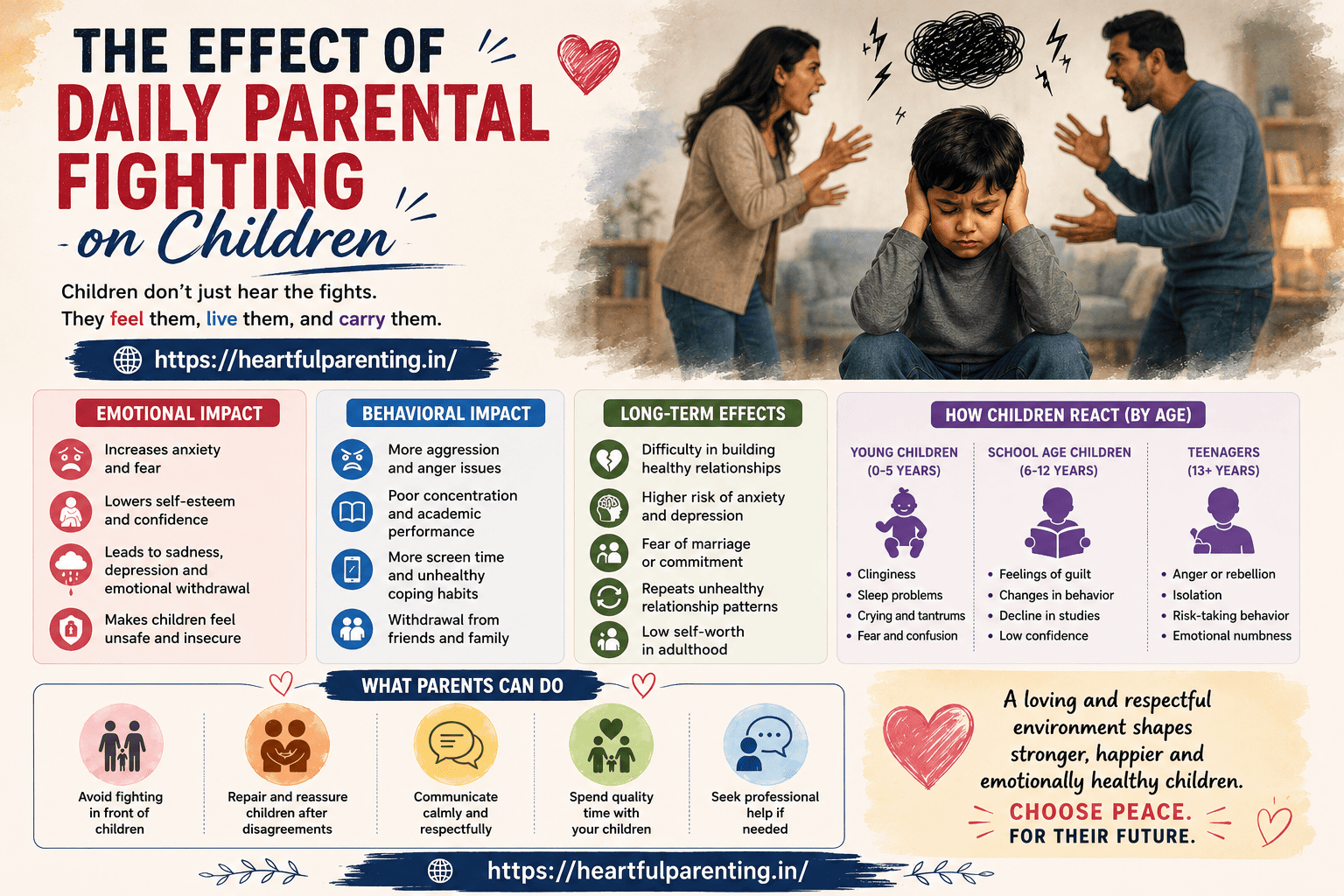
The Silent Damage: How Daily Fighting Between Parents Affects Children
Every family has disagreements. Two people living together, managing responsibilities, finances, careers, and parenting are naturally going to have moments of frustration. Arguments are part of life. But when fighting becomes a daily routine inside the home, children quietly begin carrying emotional weight they were never meant to bear.
Most parents believe children will “forget” the arguments or that they are “too young to understand.” The truth is, children understand far more than we think. Even when they don’t fully understand the words, they understand the emotions — the tension, anger, silence, fear, and distance.
A child may sit quietly in another room while parents argue, but emotionally, that child is listening to everything.
Over time, constant conflict between parents can shape a child’s confidence, emotional security, behavior, relationships, and even mental health.
This is not about blaming parents. Modern life is stressful. People are overwhelmed, exhausted, and emotionally drained. But understanding the effect of daily quarrelling on children can help families become more aware, more gentle, and more emotionally connected.
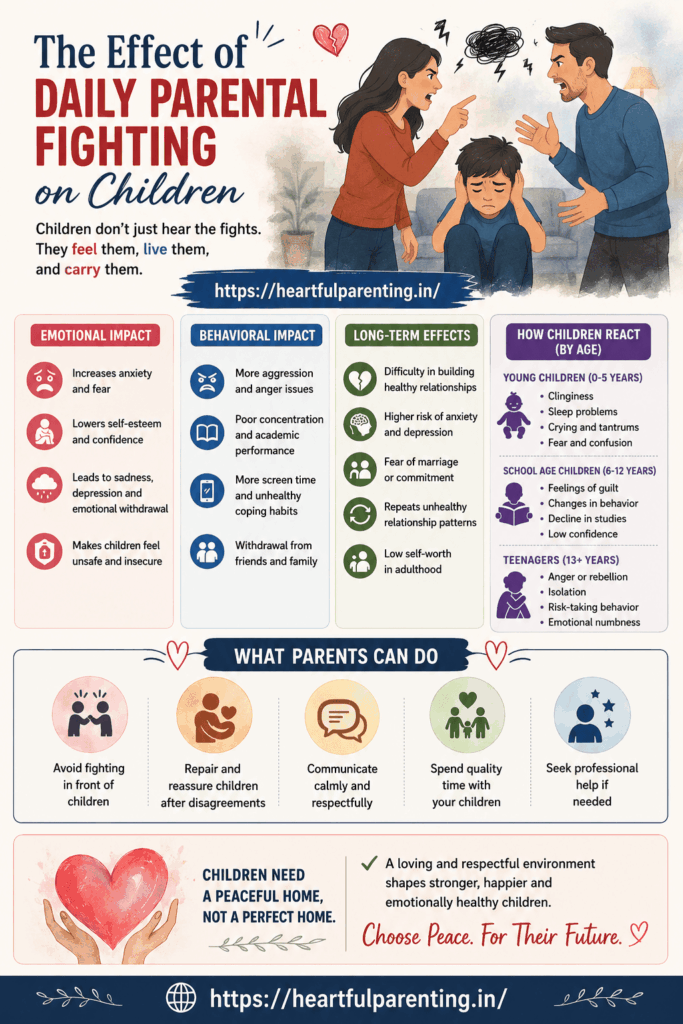
Why Children Take Parental Fighting So Deeply
For a child, parents are not just adults living in the same house. They are the child’s entire emotional world.
Home is supposed to feel safe. When that environment becomes filled with shouting, criticism, cold silence, or constant tension, children start feeling emotionally unsafe.
And children rarely know how to explain what they feel.
Some become quiet.
Some become angry.
Some pretend everything is normal while struggling internally.
A child’s mind is still developing. They do not have the emotional maturity to process complicated adult conflicts. Many children secretly blame themselves for the fights happening at home.
They may wonder:
- “Did I do something wrong?”
- “Are my parents unhappy because of me?”
- “Will they separate?”
- “Why does nobody feel peaceful at home anymore?”
These thoughts may never be spoken aloud, but they deeply affect a child’s emotional health.
The Emotional Impact on Children
1. Children Start Living in Fear
When fights happen regularly, children begin expecting conflict all the time.
They become emotionally alert — always waiting for the next argument.
Even small things like raised voices, loud footsteps, or sudden silence can make them anxious.
Some children:
- Struggle to sleep peacefully
- Become nervous easily
- Feel unsafe at home
- Start overthinking constantly
- Develop fear and insecurity
A home filled with tension does not allow a child to relax emotionally.
2. Their Confidence Slowly Breaks
Children growing up around daily conflict often stop feeling emotionally secure.
When they constantly hear negativity, blame, disrespect, or anger, it affects how they see themselves and the world around them.
They may begin feeling:
- Unimportant
- Unloved
- Ignored
- Emotionally alone
Over time, this can quietly damage self-esteem.
Some children grow up believing love always includes pain, shouting, or emotional hurt because that is what they saw every day.
3. They Stop Expressing Their Feelings
Not every child reacts loudly.
Some children slowly become emotionally silent.
They stop sharing what they feel because the emotional environment around them already feels too heavy.
Parents may think:
“He has become mature.”
“She stays in her room all day.”
“He doesn’t talk much anymore.”
But sometimes silence is not maturity. Sometimes it is emotional exhaustion.
Behavioral Changes Parents Often Miss
Children express emotional pain in different ways. Sometimes the signs are obvious. Sometimes they are hidden inside behavior changes.
1. Anger and Aggression
Children learn by watching.
If they regularly see shouting, blaming, disrespect, or emotional explosions, they may begin behaving the same way with siblings, classmates, or friends.
A child who witnesses anger daily may:
- Become rude or aggressive
- Fight more at school
- Throw tantrums
- Develop frustration issues
- Speak disrespectfully
Many “difficult” children are actually emotionally overwhelmed children.
2. Poor Focus and Academic Problems
It is difficult for a child to focus on studies when their mind feels emotionally disturbed.
Children dealing with stress at home often:
- Lose concentration
- Forget things easily
- Daydream in class
- Lose motivation
- Perform poorly in school
Their mind is busy managing emotional stress instead of learning.
3. Mobile Phone and Screen Addiction
This is becoming increasingly common today.
Many children escape emotional discomfort through:
- Mobile phones
- Gaming
- YouTube
- Social media
- Endless scrolling
Screens become a way to avoid painful emotions.
Sometimes what looks like “screen addiction” is actually emotional loneliness.
The Long-Term Effects Can Continue Into Adulthood
Childhood experiences shape adult emotional patterns more than most people realize.
A child raised in a stressful emotional environment may carry those wounds for years.
1. Difficulty Trusting Relationships
Children who grow up around constant conflict often struggle in future relationships.
Some become afraid of emotional closeness.
Others become overly attached and insecure.
Many silently fear abandonment, rejection, or emotional pain.
Without realizing it, they carry childhood fear into adult relationships.
2. Fear of Marriage or Commitment
When children repeatedly witness unhealthy relationships at home, marriage may start looking emotionally unsafe to them.
As adults, they may:
- Avoid commitment
- Fear emotional intimacy
- Struggle with communication
- Repeat unhealthy relationship patterns
What children see at home becomes their emotional understanding of love.
3. Anxiety and Depression Later in Life
Constant emotional stress during childhood affects mental health deeply.
Research and psychological studies have repeatedly shown that children exposed to high-conflict homes are more likely to experience:
- Anxiety
- Depression
- Emotional instability
- Anger issues
- Low self-worth
Emotional wounds from childhood do not disappear automatically with age.
Different Ages, Different Reactions
Children react differently depending on their age and personality.
Young Children
Small children may:
- Cry more
- Become clingy
- Develop sleep problems
- Feel scared easily
- Become unusually quiet
Even if they cannot explain emotions, they feel emotional instability deeply.
School-Age Children
Children between 6–12 years often:
- Blame themselves
- Feel confused
- Become emotionally sensitive
- Develop low confidence
- Show changes in school behavior
This age group silently absorbs emotional pain.
Teenagers
Teenagers may react through:
- Anger
- Isolation
- Rebellion
- Emotional detachment
- Excessive phone use
- Staying away from family interaction
Sometimes parents think teenagers are simply “misbehaving,” while in reality they are emotionally hurting.
Fighting Is Not the Real Problem — The Way It Happens Is
No relationship is perfect.
Healthy disagreements are normal and even necessary sometimes.
Children do not need parents who never argue. They need parents who handle disagreements respectfully.
There is a huge difference between:
- Solving disagreements calmly
and - Creating a toxic emotional environment every day
Children can actually learn healthy communication when parents:
- Listen respectfully
- Stay calm
- Apologize when wrong
- Solve problems maturely
But repeated shouting, insults, humiliation, or emotional coldness creates emotional damage.
Things That Hurt Children the Most
Some behaviors affect children more deeply than parents realize.
Shouting and Screaming
Loud conflict creates fear and emotional insecurity.
Insulting Each Other
When children hear disrespect between parents, they start normalizing disrespect in relationships.
Silent Treatment
Sometimes silence hurts children more than shouting.
A cold, emotionally disconnected home creates confusion and emotional tension.
Using Children During Arguments
Statements like:
- “You are just like your father.”
- “Tell your mother she is wrong.”
- “Nobody cares in this house except me.”
put emotional pressure on children they are not prepared to carry.
Children should never become emotional messengers between parents.
Signs Your Child May Be Emotionally Affected
Parents should pay attention to emotional and behavioral changes, especially if conflict at home has become frequent.
Some warning signs include:
- Sudden anger
- Fearfulness
- Anxiety
- Isolation
- Sleep problems
- Frequent crying
- Headaches or stomach pain
- Low confidence
- Excessive screen dependency
- Declining school performance
Children often express emotional pain through behavior because they cannot explain it in words.
What Parents Can Do
1. Avoid Fighting in Front of Children
If emotions are becoming intense, pause the conversation.
Not every disagreement needs to happen immediately.
Children deserve emotional peace inside the home.
2. Repair the Emotional Environment
If children witnessed an argument, reconnect with them afterward.
Reassure them:
- “This is not your fault.”
- “We are upset, but we still love each other.”
- “You are safe.”
Small emotional reassurances matter deeply.
3. Improve Communication Habits
Many daily fights happen because stress turns into poor communication.
Simple changes help:
- Listening calmly
- Avoiding insults
- Speaking respectfully
- Taking breaks during anger
- Focusing on solutions instead of blame
4. Spend Real Time With Children
Children do not only need food, education, and gadgets.
They need emotional connection.
Simple moments matter:
- Eating together
- Talking without phones
- Listening carefully
- Hugging them
- Asking how they truly feel
Emotional presence builds emotional security.
5. Seek Help When Needed
There is nothing weak about seeking counseling or family support.
Sometimes unresolved stress, anger, or emotional wounds need professional guidance.
Getting help early can protect both the relationship and the children.
Final Thoughts
Children may not always speak about what they feel, but they emotionally absorb the environment they grow up in.
Daily fighting between parents does more than create temporary stress. It shapes the emotional world of a child.
Years later, children may forget the exact words spoken during arguments, but they often remember how those moments made them feel — scared, unsafe, lonely, or emotionally invisible.
A peaceful home does not mean a perfect home.
It means a home where love remains stronger than anger, where respect exists even during disagreement, and where children feel emotionally safe no matter what problems adults are facing.
Because in the end, the way parents treat each other becomes the way children learn to understand love, relationships, and themselves.