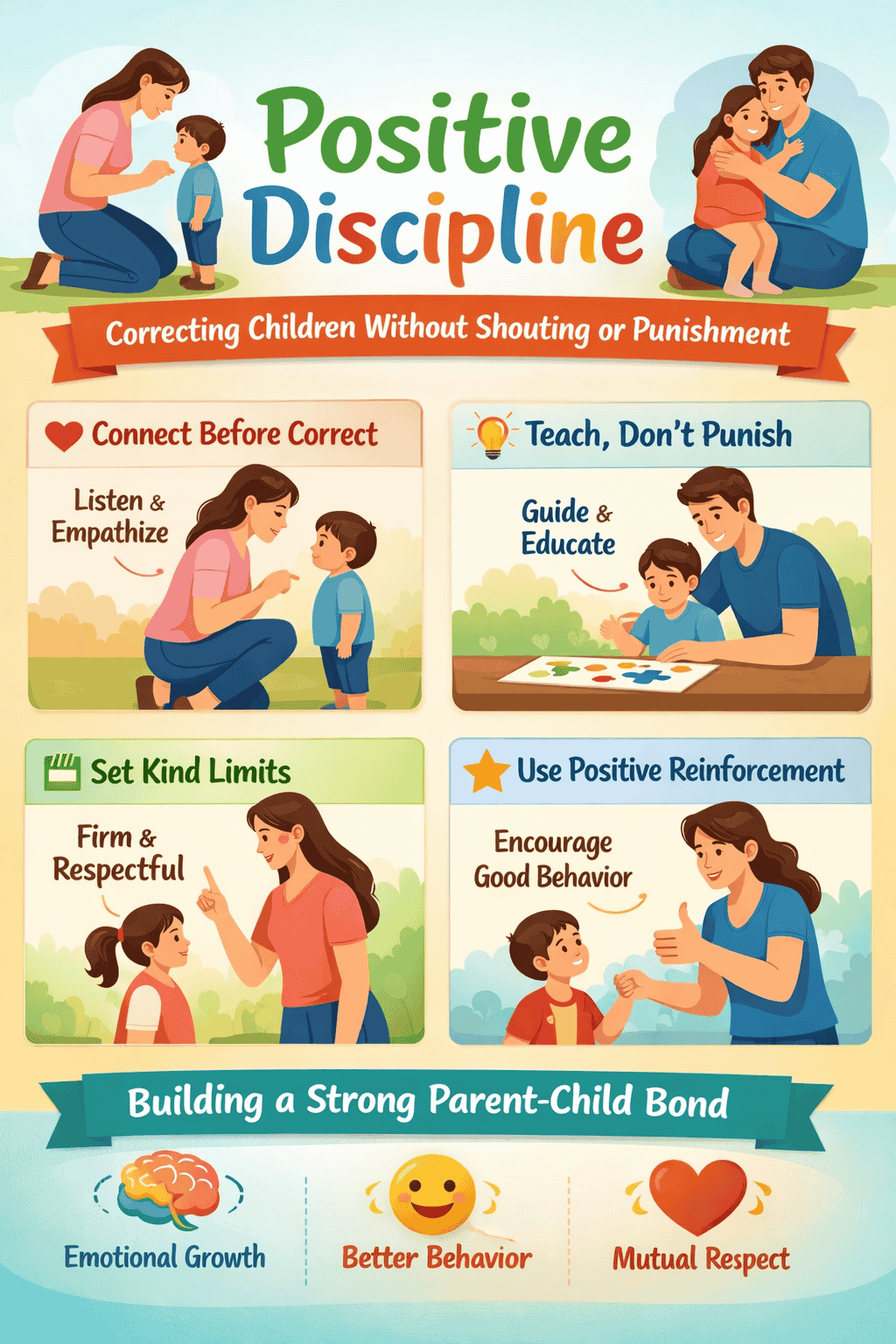
Positive Discipline: How to Correct Children Without Shouting or Punishment
Gentle parenting strategies that improve behavior while protecting emotional bonding
Introduction: A New Way of Parenting
Modern parenting is changing. More parents today are moving away from fear-based discipline and toward respectful, connection-focused approaches. The idea is simple yet powerful: children behave better not when they are scared, but when they feel understood, safe, and guided.
This is where positive discipline comes in—a method rooted in respect, empathy, and long-term character development rather than short-term control.
If you’ve ever found yourself shouting, feeling guilty afterward, and wondering if there’s a better way—you’re not alone. The good news is: there is a better way.
What Is Positive Discipline?
Positive discipline is a parenting approach that teaches children how to behave instead of punishing them for misbehavior. It focuses on:
- Respectful communication
- Emotional connection
- Teaching life skills
- Encouraging cooperation instead of forcing obedience
It is influenced by psychological principles developed by experts like Alfred Adler and Jane Nelsen, who emphasized that children need both kindness and firmness to thrive.
Why Traditional Discipline Doesn’t Work Long-Term
Many of us were raised with shouting, scolding, or even punishment. While these methods may stop behavior temporarily, they often create deeper issues such as:
- Fear and anxiety
- Low self-esteem
- Reduced trust in parents
- Rebellion or secrecy
Children may learn to avoid punishment, but they don’t necessarily learn why their behavior was wrong.
Positive discipline, on the other hand, helps children develop internal control—they behave well because they understand, not because they are afraid.
Core Principles of Positive Discipline
1. Connection Before Correction
Before correcting a child, connect with them emotionally. A child who feels heard is more likely to listen.
Instead of:
“Stop crying right now!”
Try:
“I can see you’re upset. Tell me what happened.”
Connection reduces resistance and builds trust.
2. Be Firm and Kind at the Same Time
Positive discipline doesn’t mean being permissive. It means setting clear boundaries with respect.
For example:
“I understand you want to keep playing, but it’s bedtime now.”
This shows empathy and maintains structure.
3. Focus on Teaching, Not Punishing
Mistakes are opportunities to teach, not moments to control.
Instead of punishment, ask:
- What can my child learn from this?
- How can I guide them better next time?
4. Understand the Reason Behind Behavior
Children don’t misbehave “just because.” There’s always a reason:
- Hunger
- Tiredness
- Need for attention
- Emotional overwhelm
When you understand the cause, you can address the real issue instead of just reacting.
5. Encourage, Don’t Shame
Shaming damages confidence. Encouragement builds it.
Instead of:
“You are so careless!”
Say:
“Let’s try again. I know you can do better.”
Practical Strategies to Discipline Without Shouting
1. Use Calm and Clear Communication
Your tone matters more than your words.
- Speak slowly and clearly
- Maintain eye contact
- Get down to the child’s level
Children respond better to calm authority than loud commands.
2. Set Clear Expectations in Advance
Children behave better when they know what’s expected.
Example:
“Before we go to the store, remember—no running and stay close to me.”
Clarity prevents conflict.
3. Offer Limited Choices
Giving choices gives children a sense of control.
Instead of:
“Wear this now!”
Try:
“Do you want to wear the blue shirt or the red one?”
Both options are acceptable to you, but the child feels empowered.
4. Use Natural and Logical Consequences
Let children experience the outcome of their actions (safely).
Examples:
- If a toy is thrown → it is put away for some time
- If homework is not done → they face the teacher’s feedback
This teaches responsibility without punishment.
5. Practice Time-In Instead of Time-Out
Instead of isolating the child, stay with them and help them regulate emotions.
Sit together and say:
“Let’s calm down together.”
This builds emotional intelligence and trust.
6. Model the Behavior You Want to See
Children learn by watching you.
If you:
- Stay calm under stress
- Speak respectfully
- Apologize when wrong
Your child will naturally learn the same.
7. Use Positive Reinforcement
Catch your child doing something right.
- “I really liked how you shared your toy.”
- “You cleaned up without being asked—that’s great!”
Positive attention encourages repetition of good behavior.
Common Situations and How to Handle Them
Situation 1: Child Refuses to Listen
Instead of shouting:
- Get close
- Make eye contact
- Speak calmly
“Please look at me. I need you to listen.”
Situation 2: Tantrums in Public
Stay calm. Don’t react emotionally.
- Acknowledge feelings
- Remove from situation if needed
“I know you’re upset. Let’s go somewhere quiet.”
Situation 3: Sibling Fights
Avoid taking sides immediately.
- Hear both sides
- Guide them to solve the problem
“How can we fix this together?”
Situation 4: Not Following Routine
Use consistency and reminders instead of anger.
“After dinner, we brush teeth. That’s our routine.”
Benefits of Positive Discipline
When practiced consistently, positive discipline leads to:
1. Strong Parent-Child Bond
Children feel safe and emotionally connected.
2. Better Emotional Regulation
They learn how to handle anger, frustration, and disappointment.
3. Improved Behavior
Children cooperate more willingly.
4. Higher Self-Esteem
They feel valued and capable.
5. Long-Term Life Skills
Problem-solving, responsibility, and empathy develop naturally.
Challenges Parents May Face
Positive discipline is powerful—but not always easy.
1. Requires Patience
It takes time to change habits—for both parent and child.
2. Consistency Is Key
Mixed signals confuse children.
3. Managing Your Own Emotions
Parents must regulate themselves first.
Tip: If you feel overwhelmed, pause before reacting.
How to Stay Calm as a Parent
- Take deep breaths
- Step away for a moment if needed
- Remind yourself: “My child is learning, not misbehaving intentionally.”
- Focus on long-term growth, not short-term control
Positive Discipline vs Permissive Parenting
Many people misunderstand gentle parenting.
Positive Discipline:
- Has rules and boundaries
- Uses respect and guidance
Permissive Parenting:
- Few or no rules
- Avoids saying “no”
Children actually feel more secure with clear and respectful boundaries.
Building a Positive Discipline Routine at Home
Start small. You don’t need to change everything overnight.
Daily Habits:
- Spend 10–15 minutes of quality time with your child
- Listen without interrupting
- Appreciate small efforts
- Maintain predictable routines
Weekly Reflection:
Ask yourself:
- Did I stay calm this week?
- Did I connect before correcting?
- What can I improve?
Real-Life Example
A child throws a toy in anger.
Traditional response:
“Stop it right now or I’ll take all your toys!”
Positive discipline approach:
- Stay calm
- Acknowledge emotion: “You seem upset.”
- Set boundary: “Toys are not for throwing.”
- Guide: “If you’re angry, you can tell me or take a break.”
Result: The child learns emotional expression—not fear.
Long-Term Impact on Children
Children raised with positive discipline grow into adults who are:
- Emotionally strong
- Respectful and empathetic
- Confident decision-makers
- Better at relationships
This approach doesn’t just fix behavior—it shapes personality.
Conclusion: Discipline with Heart
Parenting is not about controlling children—it’s about guiding them.
Positive discipline teaches us that:
- Connection is stronger than fear
- Respect builds cooperation
- Calmness creates learning
You don’t need to be a perfect parent. You just need to be a present and aware one.
Every time you choose understanding over shouting, you are building a stronger, healthier relationship with your child.